Therapists often spend hours on documentation, leading to burnout. Real-time therapy note tools save time by automating note-taking during sessions, ensuring compliance with insurance and privacy standards. Below are seven tools designed to streamline this process, each offering unique features for solo practitioners, teams, or large organizations:
- Voice CRM: AI-powered voice-to-text transcription, HIPAA-compliant, tailored for iOS users.
- Mentalyc: Zero recording storage, supports multiple note formats, and offers flexible pricing.
- Upheal: Live transcription, multi-language support, and telehealth integration.
- Berries: Focuses on insurance compliance, ICD-10 code suggestions, and pre-session summaries.
- Blueprint: Embeds standardized assessments into notes, with pay-per-session pricing.
- Noted: Privacy-focused, avoids storing recordings, offers custom pricing.
- Eleos Health: Built for large organizations, supports 150+ languages, and offers group therapy analysis.
Quick Comparison:
| Tool | Key Features | Best For | Pricing |
|---|---|---|---|
| Voice CRM | Voice-to-text, practice management | Solo practitioners, iOS users | Subscription-based |
| Mentalyc | Multiple formats, no recording storage | Group practices, audit-ready docs | $14.99–$99.99/month |
| Upheal | Telehealth, session analytics | Telehealth practitioners | Free–$99/month |
| Berries | Insurance-focused, ICD-10 suggestions | Therapists with variable caseloads | Custom pricing |
| Blueprint | Assessment integration, outcomes tracking | Evidence-based therapists | $0.24–$1.49/session |
| Noted | Privacy-first, no recording storage | High-volume practitioners | Custom pricing |
| Eleos Health | Enterprise-level, group therapy support | Large organizations | Custom contract |
Choose a tool based on your workflow, privacy needs, and budget. Most platforms offer free trials to help you decide.
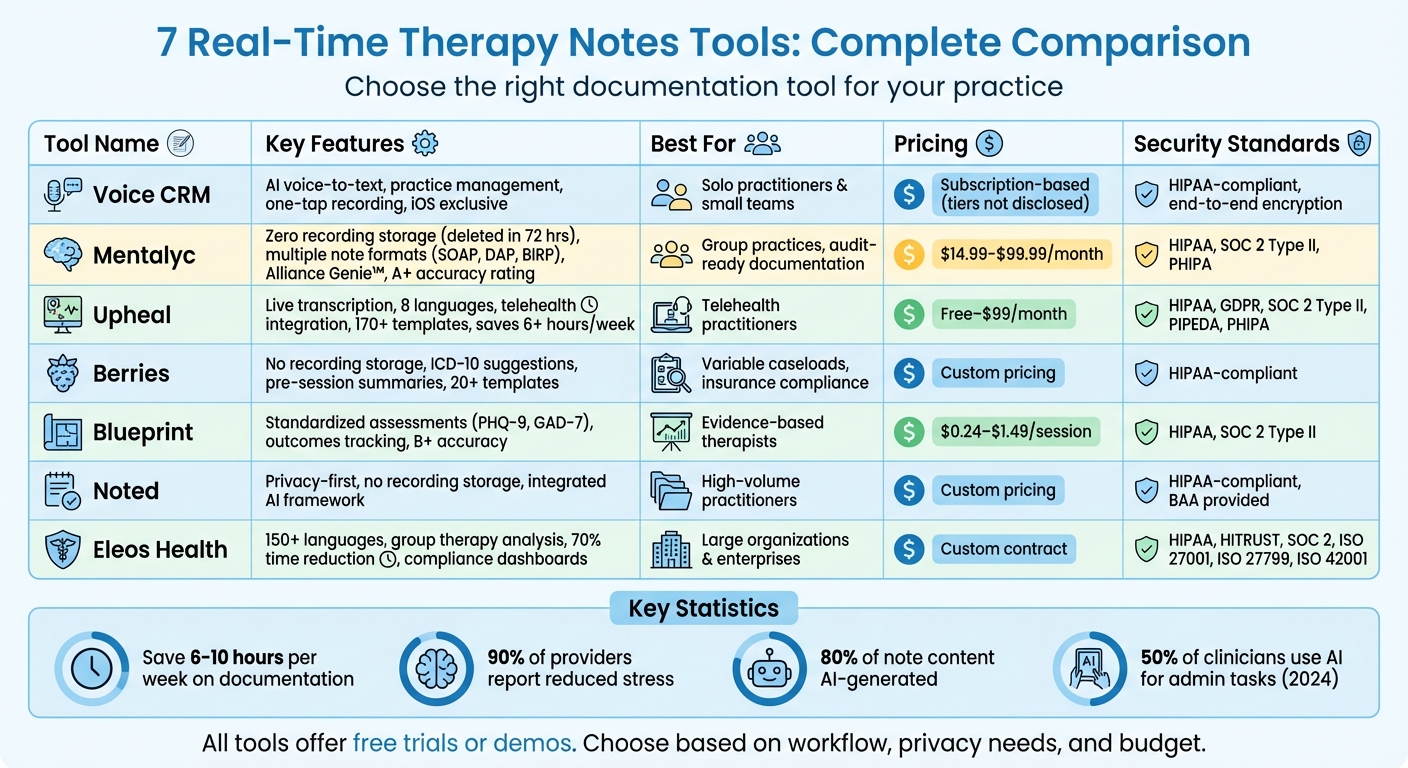
Real-Time Therapy Notes Tools Comparison: Features, Pricing & Best Use Cases
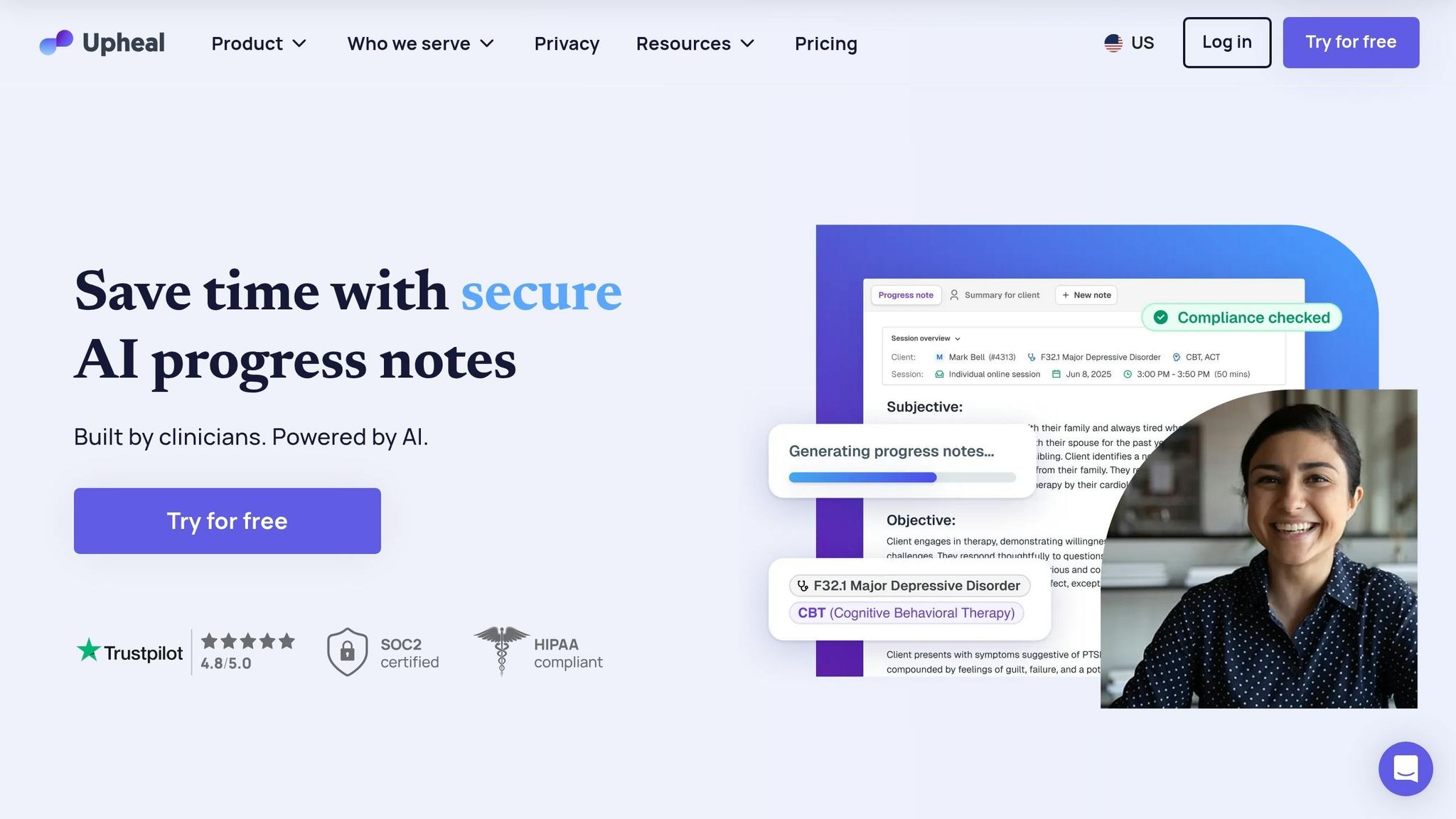
Review of Upheal: AI that writes progress notes
sbb-itb-ce1c1e8
1. Voice CRM – Therapy Notes That Practically Write Themselves
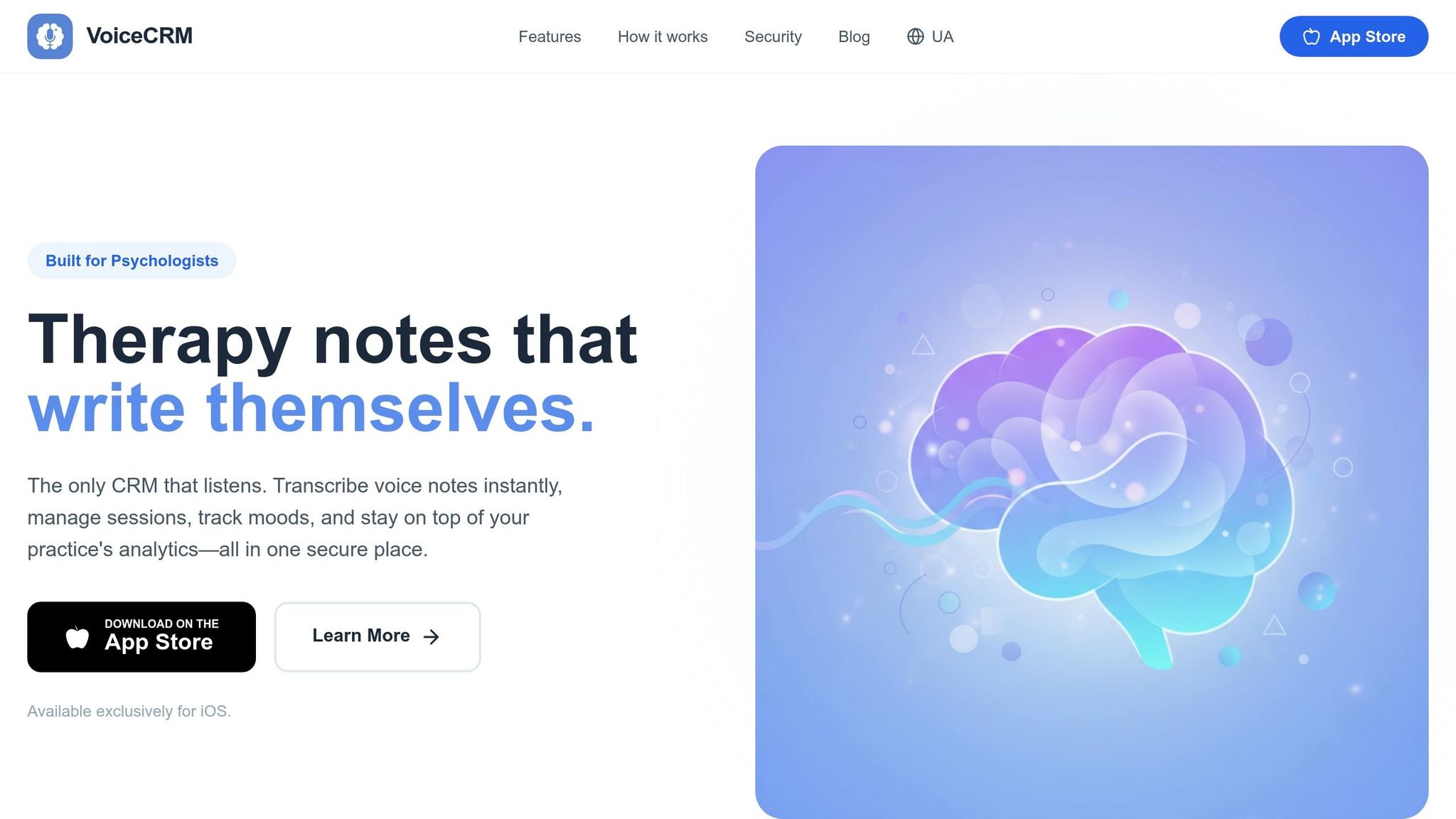
Voice CRM is designed for mental health professionals who want to cut down on paperwork and focus more on their clients. Using AI-powered voice-to-text technology, it instantly converts spoken words into formatted therapy notes. With just one tap after a session, therapists can record their clinical impressions, and the system automatically links the transcription to the client’s record. This feature alone can free up over 10 hours a week that would otherwise be spent on documentation.
HIPAA Compliance and Data Security
Voice CRM prioritizes data security with end-to-end encryption, safeguarding therapy notes and client information both during transmission and storage. Built on a HIPAA-compliant platform with a "Private by Design" framework, it ensures that only the therapist has access to the encrypted data.
Accurate Transcriptions, On the Spot
The platform’s AI transcription captures session details immediately, allowing therapists to document insights while they’re still fresh. Its one-tap recording functionality reduces the risk of forgetting key details that might be overlooked if notes are delayed. Transcriptions are automatically formatted, linked to the client’s history, and tagged with recurring themes, making it easier to track patterns and integrate with other tools.
Streamlined Therapy Workflows
Voice CRM doesn’t stop at note-taking – it centralizes practice management into one user-friendly interface. Features include mood tracking to monitor emotional trends, supervision management for professional development, and payment tracking with built-in financial analytics. Smart reminders ensure therapists stay on top of logging clinical notes and payment details after each session, simplifying record-keeping, billing, and supervision documentation.
Tailored for Solo Practitioners and Small Teams
Voice CRM is exclusively available on iOS through the Apple App Store. It’s designed with independent psychologists, licensed therapists, and psychology students or interns in mind. While pricing details aren’t publicly available, the platform is positioned as a straightforward and efficient solution for solo practitioners who want to avoid the complexity of larger enterprise software systems.
2. Mentalyc
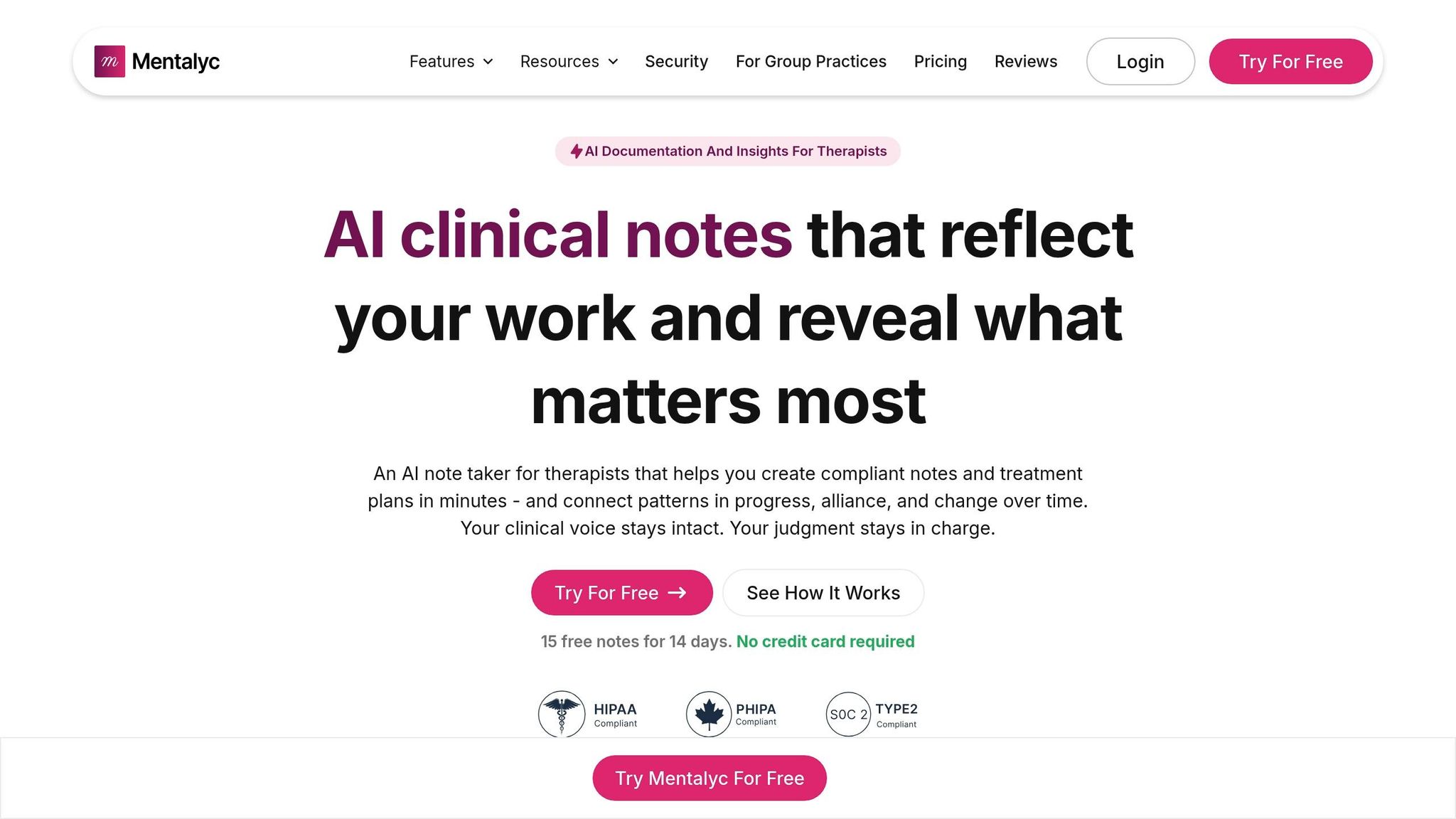
Mentalyc sets a high bar for clinical transcription and security, earning the trust of over 30,000 therapists by 2026. Known for its precision, the platform boasts an A+ rating for note accuracy, making it a go-to solution for mental health professionals. It’s tailored to recognize therapeutic frameworks like CBT, DBT, ACT, EMDR, and IFS, ensuring the notes it generates align with the language therapists use in practice.
HIPAA Compliance and Data Security
Mentalyc prioritizes privacy and security with a zero recording storage approach – session audio is automatically deleted within 72 hours of generating notes. Fully compliant with HIPAA and SOC 2 Type II standards, the platform also provides a signed Business Associate Agreement (BAA) that’s accessible within the app. Importantly, Mentalyc guarantees that clinician and client data is never used to train AI models, sold, or shared with third parties .
Voice-to-Text Transcription Accuracy
The platform converts session recordings, uploads, or dictations into structured, insurance-ready notes, allowing therapists to complete documentation in under five minutes. It supports a variety of note formats, including SOAP, DAP, BIRP, GIRP, PIRP, SIRP, PIE, and Intake notes, and accommodates different session types – ranging from individual and couples to family and group therapy. The Alliance Genie™ feature adds another layer of value by identifying relational insights like therapeutic attunement and potential ruptures, ensuring accurate session reviews.
"My notes get finished after every single session now because Mentalyc makes it so easy. I’m not stressed out about notes and I feel like my notes are of much higher quality." – Sasha Kendall, Licensed Clinical Social Worker
Integration with Therapy Workflows
Mentalyc seamlessly integrates into therapy workflows with a one-click transfer feature that works with any EHR system via a Chrome extension. This eliminates the need for manual copy-pasting. The platform also maintains the "Golden Thread" of clinical documentation by automatically linking session notes to treatment goals and progress tracking . Additional tools, like the AI Treatment Planner and AI Progress Tracker, help therapists set SMART goals and visualize symptom changes over time – without requiring extra questionnaires.
Pricing and Scalability for Solo Practitioners or Teams
Mentalyc offers flexible pricing plans to suit both solo practitioners and group practices. A 14-day free trial with full Pro access and 15 notes is available – no credit card needed. Subscription options include the Mini plan at $14.99/month, the Super plan at $99.99/month for solo users, and a Team Plan at $49.99/seat/month for group settings .
3. Upheal
Upheal streamlines the process of writing therapy progress notes by using real-time transcription that adjusts to each therapist’s unique style. This tool can help providers complete notes up to 90% faster, saving over 6 hours per week. It’s designed to work seamlessly across in-person, telehealth, and EHR platforms, making it suitable for a variety of practice settings.
HIPAA Compliance and Data Security
Upheal prioritizes security and meets stringent standards, including HIPAA, PHIPA, PIPEDA, GDPR, and SOC 2 Type II compliance. It provides a Business Associate Agreement (BAA) to ensure compliance with HIPAA requirements. Audio recordings are automatically deleted after notes are generated, though users can manually save them if needed. Other security measures include record-level encryption, regular audits, continuous external testing, and detailed tracking of personal data activity through an audit log. Clinicians and clients can also choose to opt out of sharing de-identified data for AI training at any time.
Voice-to-Text Transcription Accuracy
Upheal’s AI adapts to each therapist’s language and terminology, improving accuracy over time. It supports transcription in 8 languages – English, Spanish, Portuguese, German, French, Italian, Mandarin, and Hindi – and offers over 170 clinically-approved sections to customize note templates. While the transcription performs well in individual therapy sessions, some clinicians have noted difficulties with speaker identification during family or couples therapy, especially when voices overlap. The Smart Edit feature assists therapists in refining note structure using AI prompts, though occasional manual adjustments may still be necessary. This adaptability ensures Upheal works effectively across different therapy scenarios.
"Your AI is incredible! Not only does it save me time and energy completing my therapy notes, it also captures the clinical information I need." – Melissa Bartholomew, Licensed Mental Health Counselor
Integration with Therapy Workflows
Upheal integrates smoothly into therapy workflows, enhancing efficiency. Using a Chrome browser extension, therapists can transfer notes directly into any EHR system with a single click, eliminating the need for manual copy-pasting. It also integrates with Zoom and other telehealth platforms, while supporting in-person sessions through mobile or desktop apps. The Premium plan includes a "Golden Thread" feature that connects treatment plans with progress notes and session interventions, ensuring documentation is ready for insurance purposes. Additionally, the Compliance Checker highlights any missing elements in notes to meet payer standards and prepare for audits. For private-pay practices, the "UphealOS" system offers scheduling, client self-scheduling, practice forms, and payment processing through Stripe.
Pricing and Scalability for Solo Practitioners or Teams
Upheal provides a Free plan that allows unlimited notes from dictation, text summaries, or manual uploads, though it doesn’t include live session capture with AI notes. The Starter plan is priced at $29/month (or $19/month when billed annually), offering live capture for in-person and EHR calls, template customization, and Smart Edit. The Premium plan, at $99/month (or $69/month annually), adds telehealth AI notes, treatment plans, an AI assistant, and advanced analytics. For larger practices, Team and Enterprise plans offer custom pricing and include features like supervision tools, team management, SSO, API access, and a dedicated success manager. Upheal has received an "Excellent" rating of 4.6/5 from 62 reviews as of late 2025.
4. Berries
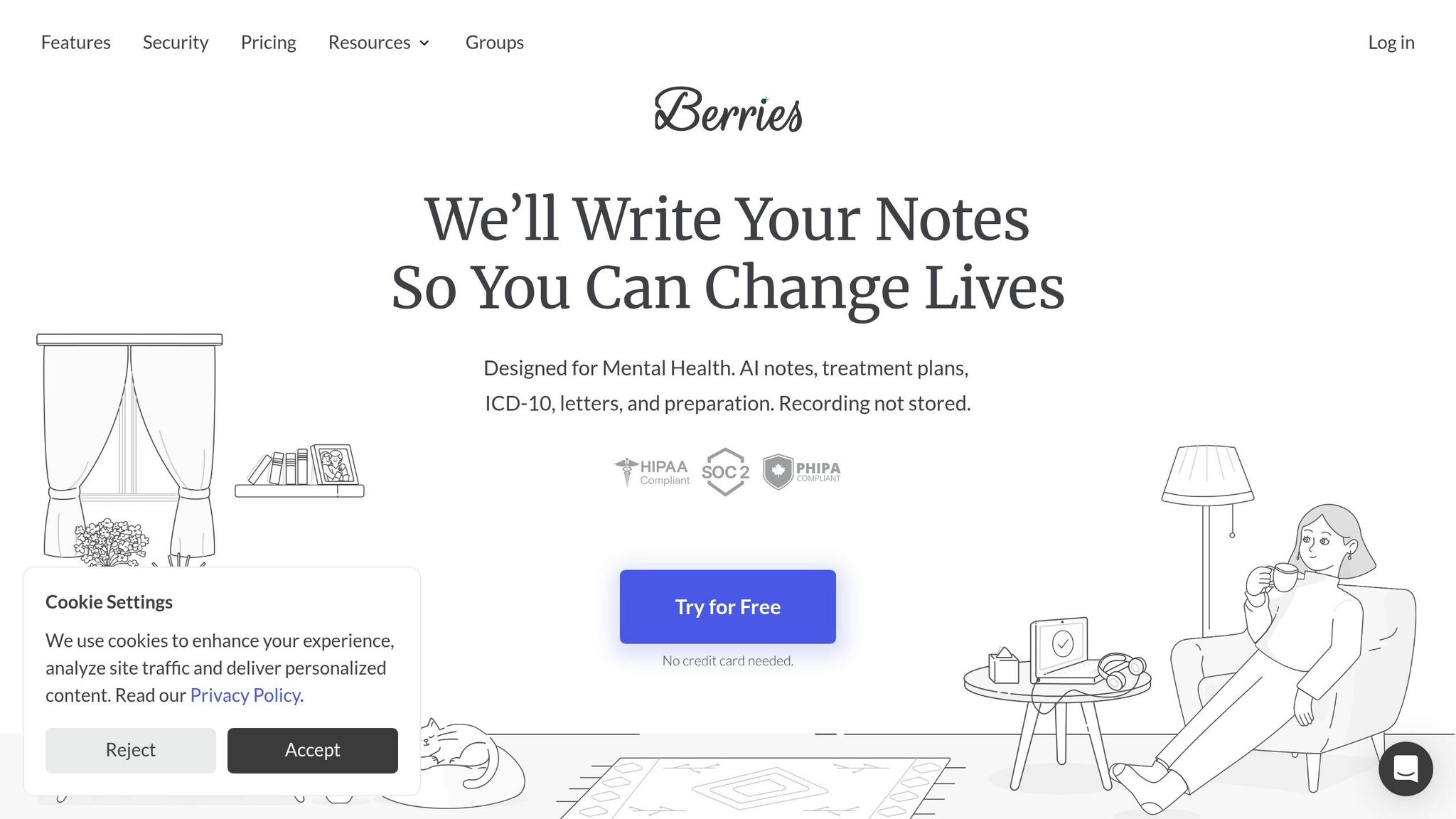
Berries is a documentation platform designed to ensure insurance compliance while maintaining a clear and organized clinical narrative. It structures notes to reflect medical necessity, seamlessly aligning goals, session notes, and progress updates. Unlike many competitors, Berries is an independent company that has not raised venture capital, which it claims allows them to prioritize clinicians’ needs over investor demands. This focus shapes Berries’ capabilities and approach.
HIPAA Compliance and Data Security
Berries is fully HIPAA-compliant and takes an unusual stance on privacy: it does not store session recordings after generating notes. This approach enhances patient confidentiality and reduces liability for practitioners. Designed specifically for mental health professionals, its security features aim to improve documentation standards while maintaining clinical accuracy.
"The fact that it doesn’t store recordings is a massive bonus for patient privacy." – Nadine Wilches, LCSW, CEO at MindArch Health
Voice-to-Text Transcription Accuracy
Berries supports both in-person and telehealth sessions, enabling therapists to focus entirely on their clients. Many users praise its transcription quality, noting its ability to capture subtle therapeutic nuances better than other options. A standout feature is its "learn" function, which adapts to each therapist’s writing style and automatically incorporates necessary insurance language. The platform also supports multiple languages and includes over 20 customizable mental health templates, such as SOAP and DAP formats.
"I loved how the system summarized the client’s feelings exactly, even with quotes. I don’t have to write notes anymore while talking to the client. I can focus on them and their body language." – Ledora Yerks, Executive Director
These transcription capabilities integrate seamlessly with broader clinical workflows.
Integration with Therapy Workflows
Berries enhances therapy workflows with features like pre-session overviews, which summarize previous notes, goals, and follow-ups. It offers ICD-10 code suggestions to help justify insurance claims and includes an AI Chat Assistant that acts as a clinical partner. This assistant uses context from past notes to clarify ideas or explore treatment options. Clinicians can easily transfer generated notes into their preferred EMR/EHR systems, and the platform can also create automated patient letters for schools or employers based on session notes.
"The nuance of the transcriptions themselves were far superior. It is amazing. Just as important is the customer service. The Berries team have treated me like a VIP even though I am just a one-person agency." – David Eichler, Next Stage Therapy and Counseling
Pricing and Scalability for Solo Practitioners or Teams
Berries offers a "Try for Free" option, allowing new users to explore its clinical note generation and templates before committing. The platform is designed to accommodate both solo practitioners and larger teams, including addiction counselors, school psychologists, and marriage and family therapists. While specific pricing tiers are not publicly disclosed, the company is inviting users to join a waiting list for its upcoming "AI-Native EMR" service. This new system promises to function as a complete electronic medical record solution with automated documentation. Users frequently highlight the platform’s ability to save significant time by cutting down on paperwork.
5. Blueprint
Blueprint takes real-time documentation to the next level by seamlessly integrating standardized assessment metrics. It provides a system for outcomes-focused documentation, embedding measurement-based care into therapy notes. This makes it a go-to tool for clinicians tracking symptom changes through assessments like PHQ-9 and GAD-7, all while maintaining compliance with HIPAA and SOC 2 Type II standards.
HIPAA Compliance and Data Security
Blueprint ensures that session recordings are securely stored on its servers, adhering to HIPAA regulations and SOC 2 Type II certification. However, the platform has not publicly clarified its policy on using data for AI model training. Despite this, its robust security measures make it an excellent choice for clinicians needing to integrate standardized assessments into clinical documentation, especially in environments requiring detailed, objective progress tracking.
Voice-to-Text Transcription Accuracy
The platform earns a B+ rating for transcription accuracy. While it performs well overall, some clinicians have noted that the AI-generated notes can feel repetitive or overly focused on rating scale data. This often leads to manual edits to add clinical nuance and ensure the notes fully reflect the session.
Integration with Therapy Workflows
Blueprint is designed to sync seamlessly with existing EHR workflows, incorporating assessment scores and progress charts directly into the system. While its automatic note drafting can save time, minor tweaks may still be necessary to refine clinical details. The platform shines in individual therapy sessions, with its documentation tools tailored to solo practitioners’ needs.
Pricing and Scalability for Solo Practitioners or Teams
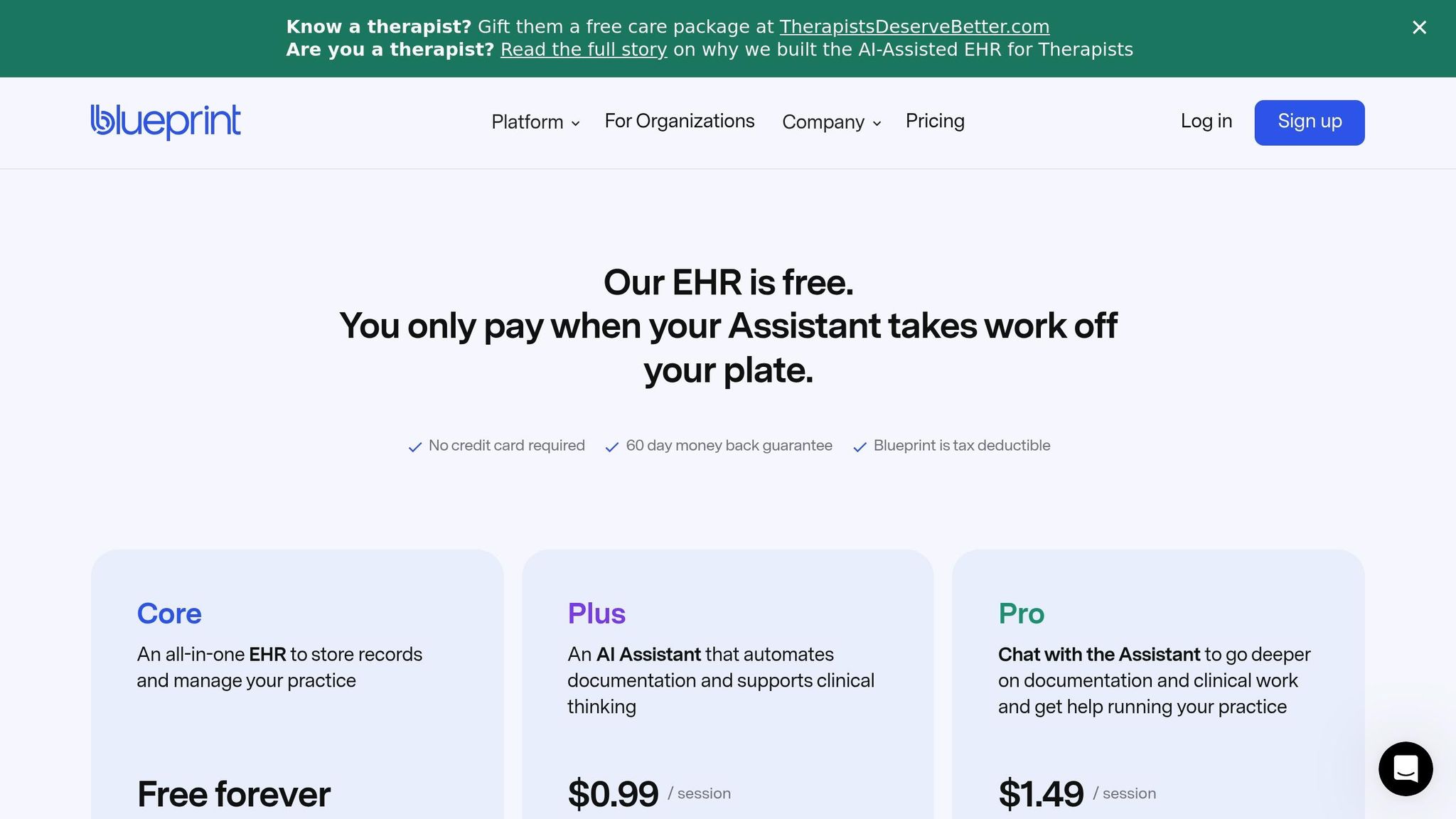
Blueprint uses a pay-per-session pricing model, offering three tiers: Standard ($0.24/session), Plus ($0.49/session), and Pro ($1.49/session). A free trial is also available. This flexible structure helps solo practitioners manage expenses based on their workload, though the platform is currently optimized for individual therapy sessions rather than group or team-based practices.
6. Noted
Noted has carved a niche for itself by prioritizing data privacy in its approach to documentation.
This platform focuses on keeping therapy data secure with its integrated AI framework, ensuring that sensitive information remains protected and isolated from external systems.
HIPAA Compliance and Data Security
Noted operates under a formal Business Associate Agreement (BAA), making it legally bound to comply with HIPAA privacy standards for safeguarding patient information. Unlike many other platforms, it explicitly avoids mining user data for algorithm development or any purpose outside the specific features clinicians rely on. Therapy notes stay within the confines of each practice and are not used to train external AI models.
Voice-to-Text Transcription Accuracy
While Noted emphasizes data security, it does not publicly share metrics on its transcription accuracy. This aligns with its focus on privacy rather than showcasing performance data.
Integration with Therapy Workflows
Noted is built to streamline documentation with its integrated design. However, specific details about its compatibility with electronic health records (EHR) systems are limited.
Pricing and Scalability for Solo Practitioners or Teams
The platform employs a custom pricing model based on the size of the practice. This approach can be advantageous for larger practices but may pose challenges for solo practitioners working with tighter budgets.
7. Eleos Health
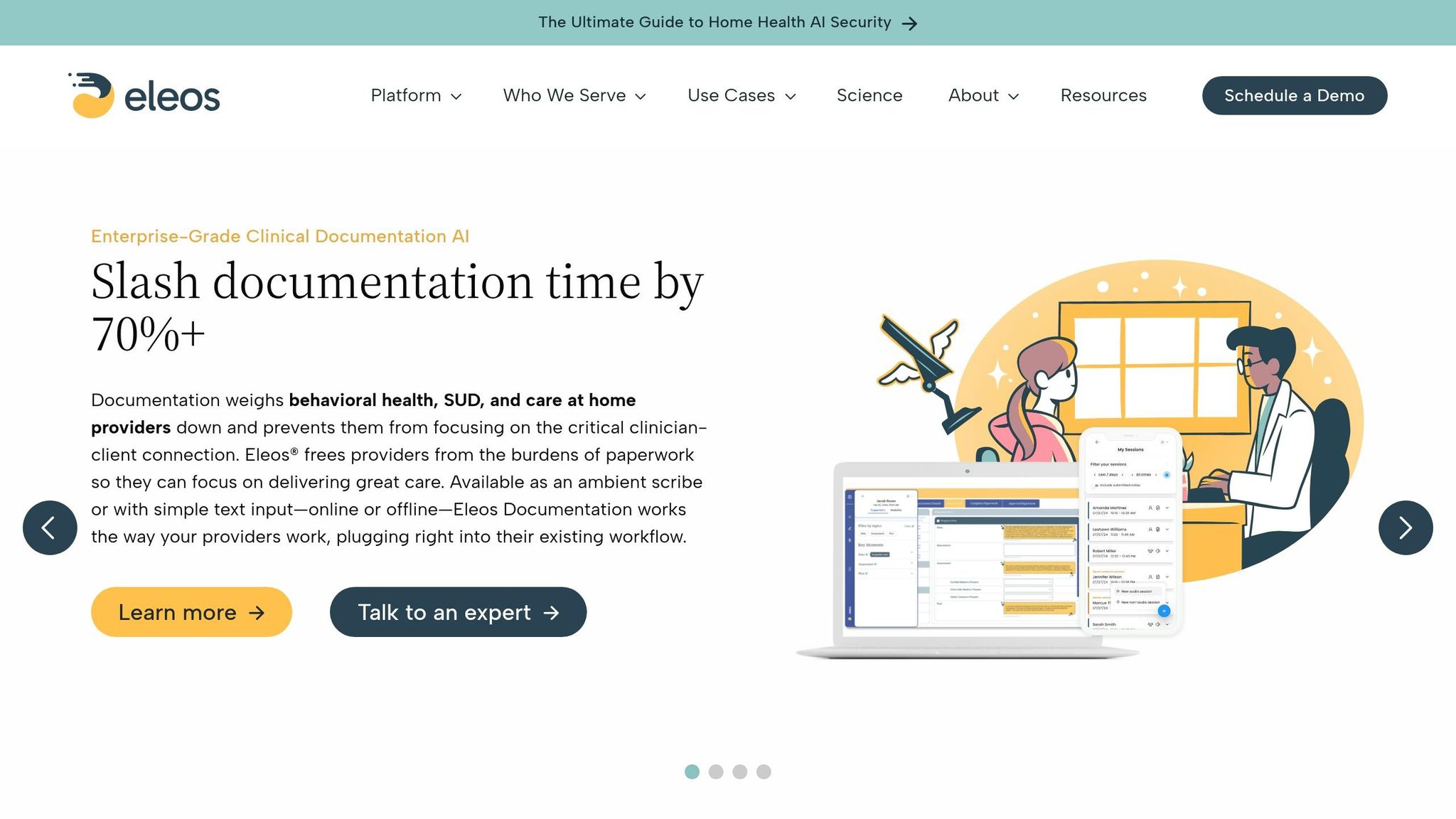
Eleos Health is a platform built for large behavioral health organizations, offering solutions for compliance and documentation needs. It caters to health systems, community agencies, and multi-clinician practices that require centralized oversight and advanced analytics.
The platform works by capturing ambient audio in real time and suggesting notes without recording or storing conversations, ensuring privacy remains intact. By utilizing this technology, Eleos can reduce provider documentation time by over 70%, with its AI generating around 80% of progress note content.
These features are paired with strong security and compliance measures.
HIPAA Compliance and Data Security
Eleos Health prioritizes data security, holding certifications like HIPAA, HITRUST, SOC 2, ISO 27001, ISO 27799, and the AI-specific ISO 42001 certification. Its AI reviews progress notes in real time, cutting compliance feedback loops by a factor of 180.
Voice-to-Text Transcription Accuracy
The platform supports transcription in over 150 languages, including Spanish, French, Mandarin, and Spanglish, converting them into English clinical documentation. With a 90% submission rate achieved within 24 hours, Eleos helps prevent denials caused by late documentation. Studies show that providers using Eleos experience double the client engagement and see 3–4 times better symptom improvement. As Carl Clark, MD, President & CEO of Wellpower, remarked:
"Eleos enables us to pull the admin function out of the therapeutic relationship and show clinicians their impact."
Integration with Therapy Workflows
Eleos is EHR-agnostic, meaning it integrates seamlessly with existing workflows through a browser extension, eliminating the need for complex API setups. It offers multiple input options, including the "Ambient AI Scribe" for live session capture and a "Short Summary" mode that transforms bullet points into detailed progress notes. For mobile users, offline documentation is supported and syncs securely to the EHR once reconnected. Additionally, the platform’s group therapy solution analyzes entire sessions, generating both overall session notes and individual speaker-specific notes.
Pricing and Scalability for Solo Practitioners or Teams
Eleos Health is exclusively designed for enterprise-level organizations and operates on a custom contract basis. It does not offer public pricing tiers or free trials, making it less accessible to solo practitioners or smaller practices with limited resources. Shena Ureste, Chief Executive Officer of Texana Center, shared her perspective:
"Staff seem to be really excited about Eleos. Even those who were a little skeptical at first are like, ‘Wow, why didn’t we do this sooner?’"
For larger organizations, Eleos offers impressive scalability. Its features include centralized compliance monitoring, supervisory dashboards, and tools for leadership reporting, enabling teams to track staff activity and caseloads efficiently. Research highlights that 90% of providers report reduced job-related stress when using the platform.
Feature Comparison Table
Here’s a quick-reference table showing pricing, core features, ideal use cases, and security standards for each tool.
| Tool | Pricing Model | Key Features | Best For | Security Standards |
|---|---|---|---|---|
| Voice CRM | Tiered Subscription (Free/Basic/Pro) | Advanced voice-to-text transcription, complete practice management | Solo practitioners and small teams | HIPAA-compliant, end-to-end encryption |
| Mentalyc | $14.99–$99.99/mo (Mini/Basic/Pro/Super) | Ambient AI scribe, group therapy notes, no recording storage, clinical focus | Group practices and audit-ready documentation | HIPAA, PHIPA, SOC 2 Type II |
| Upheal | Free plan; $19–$69/mo (Starter/Premium) | Telehealth-native recording, session analytics, talk-time ratios, Alliance Genie™ | Telehealth practitioners needing session insights | HIPAA, GDPR |
| Berries | Per-session credits ($0.24–$1.49) or $129/mo for 100 sessions | Dictation-based summaries, measurement-based care, outcomes tracking | Therapists with variable caseloads | HIPAA-compliant |
| Blueprint | Per-session ($0.24–$1.49) | Measurement-based care integration, clinical outcomes tracking | Evidence-based practice-focused therapists | HIPAA-compliant |
| Noted | Per-note credits ($1–$1.50/note) | Checkbox/text-input model, no audio recording required | High-volume practitioners with consent concerns | HIPAA-compliant |
| Eleos Health | Enterprise (Custom Quote) | Ambient AI scribe, 150+ language support, compliance dashboards, group therapy analysis | Large organizations and multi-clinician agencies | HIPAA, HITRUST, SOC 2, ISO 27001 |
This table simplifies the process of identifying which tool fits your practice’s requirements.
Conclusion
When choosing the right tool, focus on HIPAA compliance, smooth workflow integration, and clinical accuracy. While all tools promise data security, it’s worth digging deeper into specifics like recording storage policies, AI data usage, and SOC 2 Type II certification for added peace of mind. As Tracy Collins, LCP, aptly states:
"Legal compliance protects data. Clinical compliance protects your license".
For a quick comparison, revisit the feature table above to see how each tool aligns with these essential priorities.
Think about your workflow. If staying fully engaged during sessions is important to you, an ambient AI scribe that works in real time could save you hours each week. On the other hand, if you prefer to summarize sessions on your own, a dictation-based tool might offer more control without recording live conversations. Also, if you’re already using an EHR system, check whether the tool integrates directly to avoid the hassle of manual data entry.
Take advantage of free trials – most platforms offer them – to ensure the tool matches your style and professional needs. Pay attention to how well it understands therapeutic approaches like CBT, DBT, or EMDR. While AI use in clinical settings is still growing, a November 2024 survey revealed that 50% of clinicians rely on AI for daily administrative tasks, but only 13% currently use it for client documentation. So, if this feels unfamiliar, you’re definitely not alone.
FAQs
Do I need client consent to use real-time AI notes?
Yes, obtaining client consent is usually required when using real-time AI notes. This step is crucial to comply with privacy laws like HIPAA and to uphold ethical standards in mental health practices. Ensuring transparency with clients about how their information will be used fosters trust and safeguards their privacy.
How can I confirm a notes tool is truly HIPAA-compliant?
To ensure a notes tool complies with HIPAA, look for HIPAA and SOC 2 certifications, robust security measures like encryption, and minimal data storage. It should also offer audit-ready documentation to support insurer reviews and audits. These features help protect client data and align with legal requirements.
Will these tools work with my EHR without copy-pasting?
These tools are designed to simplify workflows, but whether they integrate with your EHR system depends on their features. Take VoiceCRM, for example – it offers secure, HIPAA-compliant voice-to-text transcription and note management. However, it doesn’t explicitly mention direct EHR integration. To avoid the hassle of manual copy-pasting, check with your EHR provider or the tool’s support team to see if automation or API connections are supported.