Psychology trainees often juggle coursework, supervision, and client care, leaving little time for detailed session documentation. Voice-to-text tools can save up to 10 hours per week, reducing note-taking time from 20–30 minutes to just 3–5 minutes per session. However, choosing the right tool requires prioritizing HIPAA compliance, data security, and training-specific features like supervision tracking and thematic tagging.
Here are the 7 best voice-to-text tools designed for psychology training:
- Voice CRM: Streamlines documentation with AI transcription, supervision modules, and mood tracking. iOS only.
- Skriber: Tailored for psychiatry with 99% accuracy in SOAP notes and psychiatric terminology.
- Sonix: Offers multi-language transcription, speaker diarization, and sentiment analysis.
- Mentalyc: Focuses on zero recording storage and therapeutic alliance insights.
- Psynth: Simplifies diagnostic report creation, reducing hours of manual work.
- BastionGPT: HIPAA-compliant transcription with tools for refining clinical documentation.
- Therapy iQ: Emphasizes HIPAA standards and secure data handling for trainees.
These tools not only save time but also improve documentation accuracy and support professional growth. For trainees, tools with zero-storage policies and audit-ready templates are especially useful for managing sensitive client data while meeting compliance standards.
Quick Comparison:
| Tool | Key Features | HIPAA Compliance | Limitations |
|---|---|---|---|
| Voice CRM | Supervision module, thematic tagging, mood tracking | End-to-end encryption, user-only data | iOS only |
| Skriber | Psychiatry-focused, SOAP notes, EHR integration | BAA, AES-256 encryption | Limited training features |
| Sonix | Speaker diarization, sentiment analysis | SOC 2 Type II, BAA | Not mental health-specific |
| Mentalyc | Zero recording storage, therapeutic insights | SOC 2 Type II, HIPAA-compliant | Limited free trial |
| Psynth | Diagnostic report automation | HIPAA-compliant, zero data retention | Focused on diagnostics only |
| BastionGPT | Customizable templates, trauma-related documentation | HIPAA-compliant, GPT-5.2 secure | Premium features costly |
| Therapy iQ | HIPAA-focused, secure documentation | Level 1 & 2 compliance | General documentation tool |
For psychology trainees, these tools offer faster documentation, better compliance, and features tailored to clinical training needs. Start with free trials to find the best fit for your workflow.
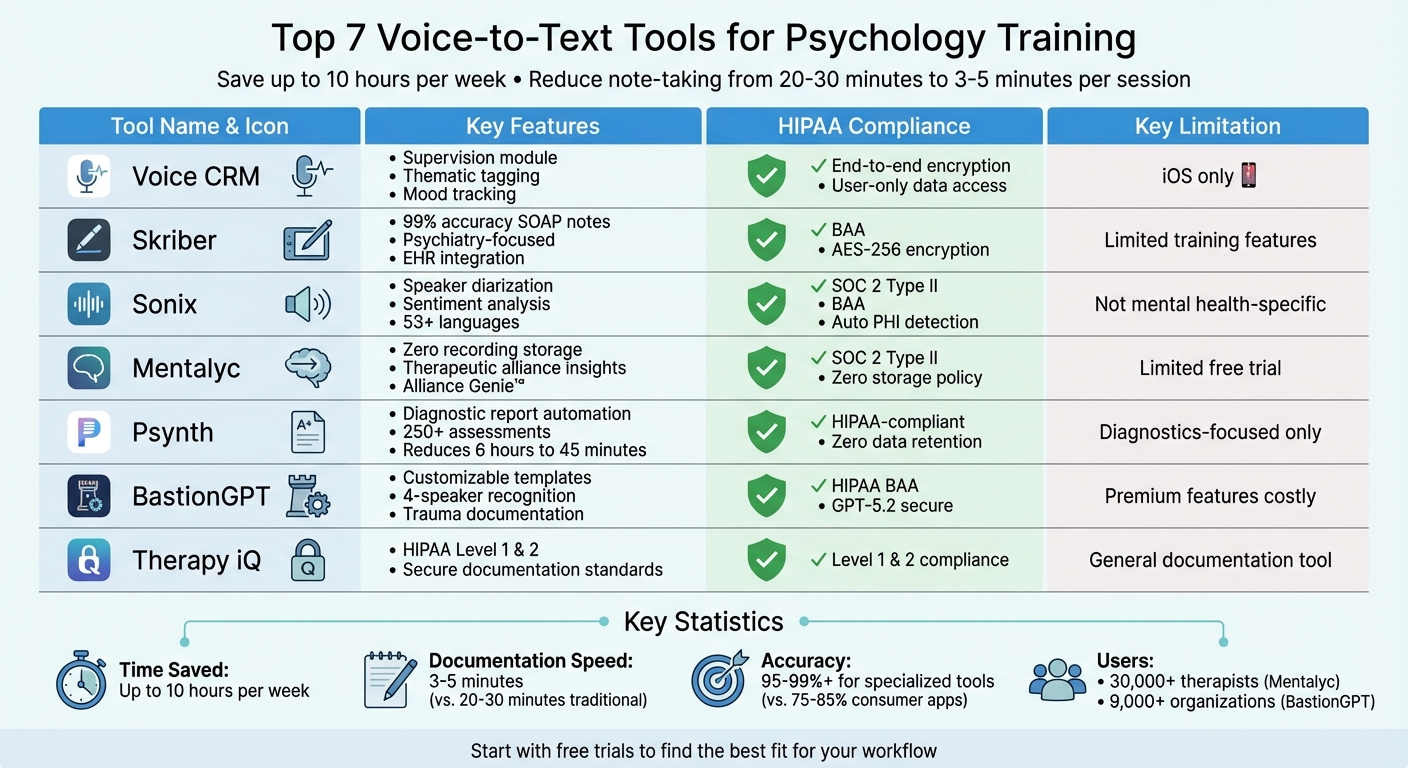
Voice-to-Text Tools for Psychology Training: Feature and Compliance Comparison
1. Voice CRM – Therapy Notes That Write Themselves
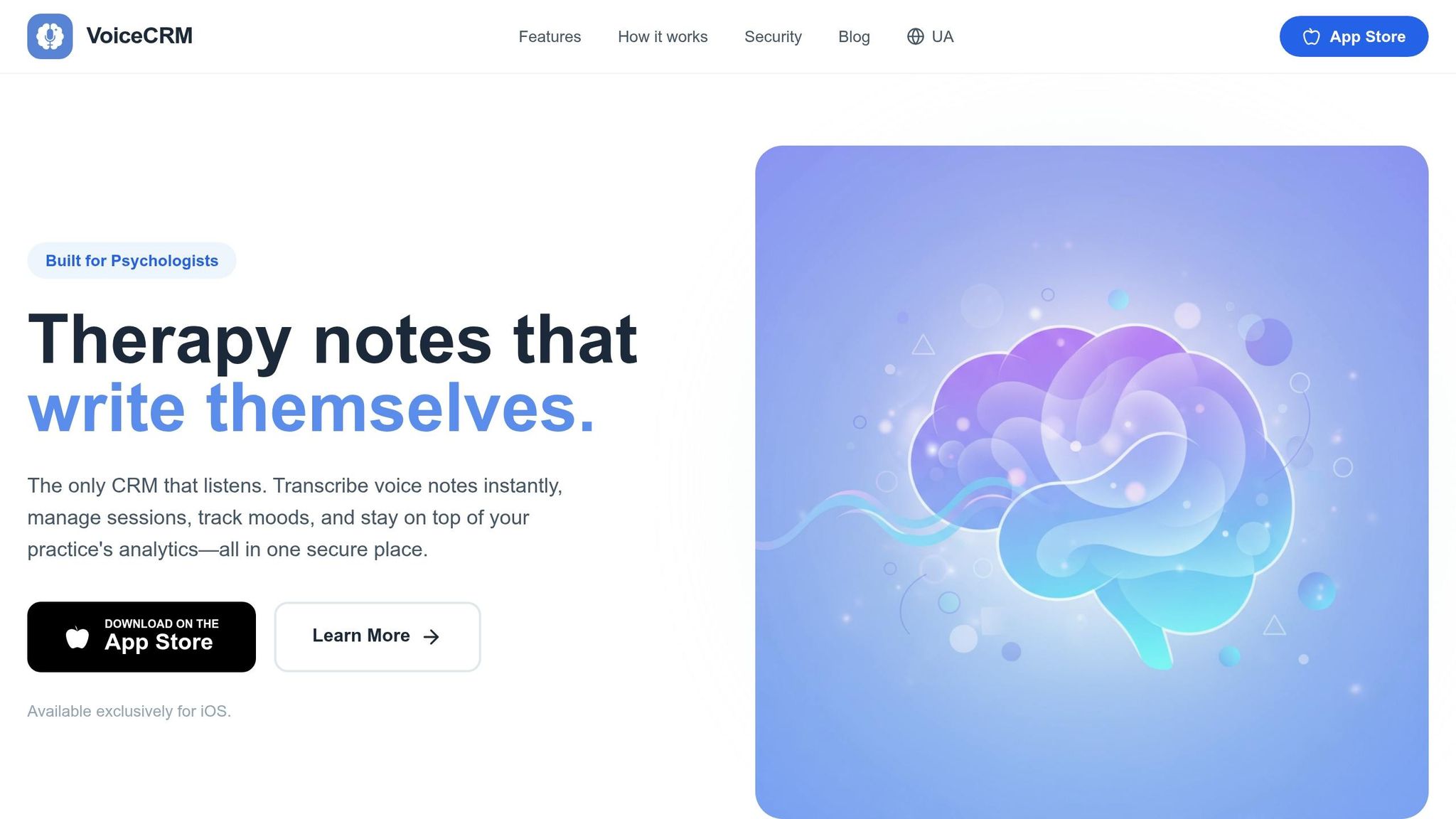
Voice CRM is a game-changer for psychology trainees, simplifying the note-taking process while staying HIPAA-compliant. By automating documentation, it claims to save over 10 hours per week – an invaluable resource for students balancing coursework, supervision, and client care.
Voice-to-Text Transcription Capabilities
Voice CRM’s AI transcription is as easy as tapping a microphone. After a session, trainees can dictate their clinical summary, and the platform instantly converts speech into formatted client notes. This ensures that critical details are captured on the spot. Smart reminders further simplify the process by prompting users to log session notes and payments immediately. These tools are designed to align perfectly with the needs of psychology trainees.
Features Designed for Psychology Trainees
Voice CRM goes beyond transcription by offering tools that support professional growth and client management:
- Supervision Module: Create supervision cases tied to clients or general practice questions, helping track progress and organize learning over time.
- Thematic Tagging: Categorize sessions by topics like attachment issues, grief, or cognitive distortions, making it easier to spot patterns and prepare for supervision.
- Mood Tracking: Visualize client emotional trends to better understand their progress.
- Financial Analytics: Keep tabs on practice profitability with detailed financial insights.
These features are tailored to help trainees manage their caseloads efficiently while meeting educational and clinical requirements.
Data Security and Encryption
Voice CRM prioritizes data security with end-to-end encryption, safeguarding information both in transit and at rest. Its "Private by Design" approach ensures that only the practitioner has access to their data. Built to meet healthcare-grade standards, the platform provides the level of protection clinical professionals need for sensitive client information. Currently, Voice CRM is available exclusively for iOS users.
sbb-itb-ce1c1e8
2. Skriber
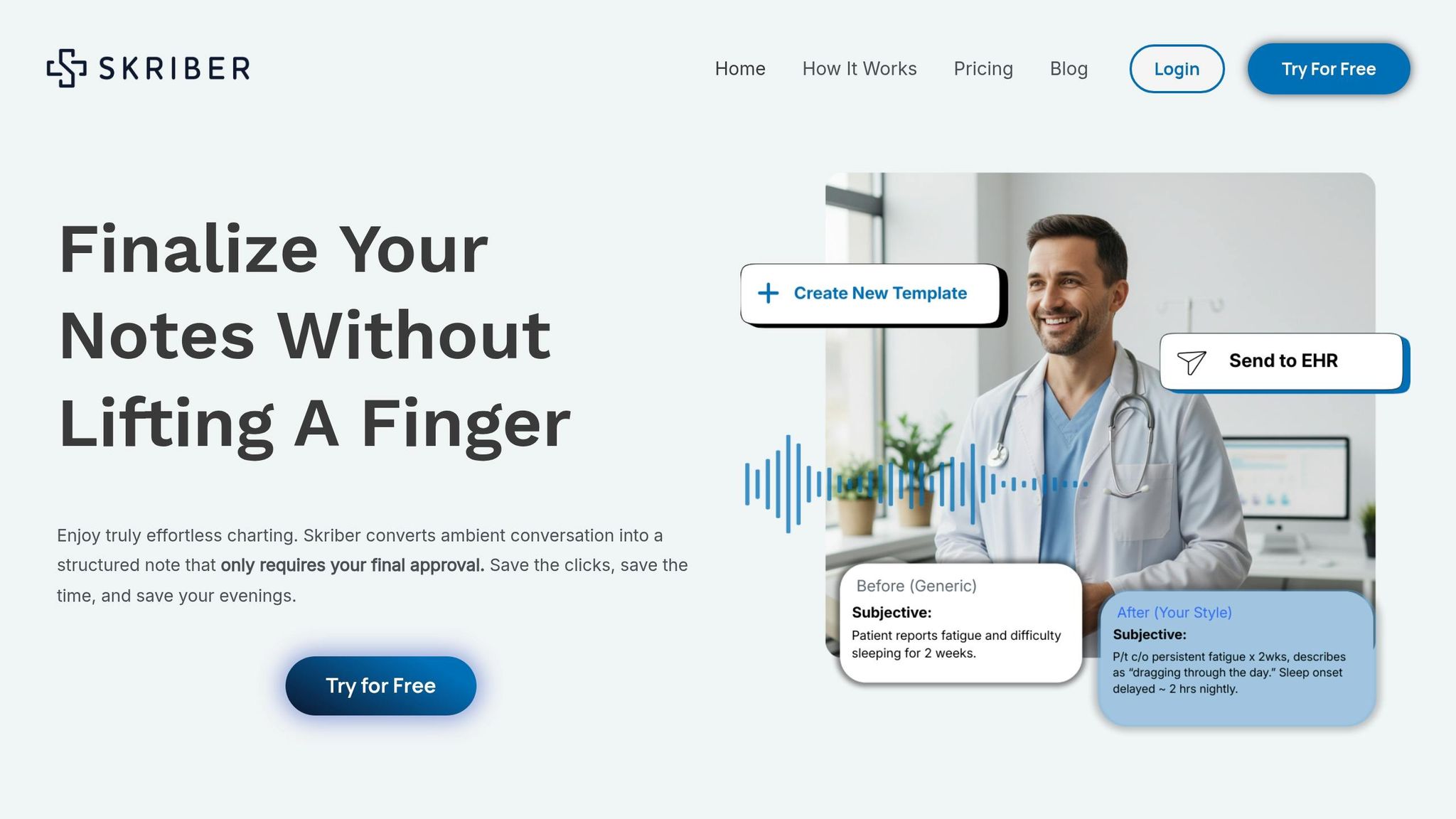
Skriber is a game-changer for psychology trainees, offering a solution that turns session narratives into structured notes without the hassle of manual typing. This platform captures conversations in real time and adapts to your clinical style, minimizing the need for post-session edits. With a 99% accuracy rate for generating SOAP notes and a 98% first-pass acceptance rate, users spend far less time correcting documentation.
Voice-to-Text Transcription Capabilities
Skriber’s transcription engine is specifically trained on psychiatric terminology, making it highly effective at identifying complex terms like "avolition", "cognitive distortion", "manic episode", and "exposure therapy." It even distinguishes between medications with similar names, such as correctly identifying "lamotrigine" as a mood stabilizer rather than an antibiotic. Dr. Connor Yost, Chief Medical Officer at Skriber, highlights this precision:
"Skriber understands psychiatry. The difference is obvious. It correctly identifies ‘avolition’ as a negative symptom of schizophrenia."
Users can dictate notes or let the system capture sessions automatically, with the software adapting to their preferred documentation style. Many report saving over 20 hours per week on paperwork, with the platform generating over 2,000,000 notes annually.
Features Tailored for Psychology Training
Skriber is equipped with mental health-focused templates, including SOAP and BIRP formats, which can be customized to meet specific training needs. Trainees can also switch between "client" and "patient" terminology to align with their supervision site’s preferences. The platform integrates seamlessly with major EHR systems like Epic and Cerner, making it easier to manage workflows across different clinical environments. These tools are further supported by its robust security framework.
HIPAA Compliance and Data Security
Skriber prioritizes data security by offering a Business Associate Agreement (BAA) and employing AES-256 encryption for data at rest. Patient information is never used to train public AI models, ensuring confidentiality. Additional security features include multi-factor authentication, session monitoring, and detailed audit trails that track access and edits to each note. For added protection, a proprietary de-identification algorithm safeguards sensitive health information during processing.
3. Sonix
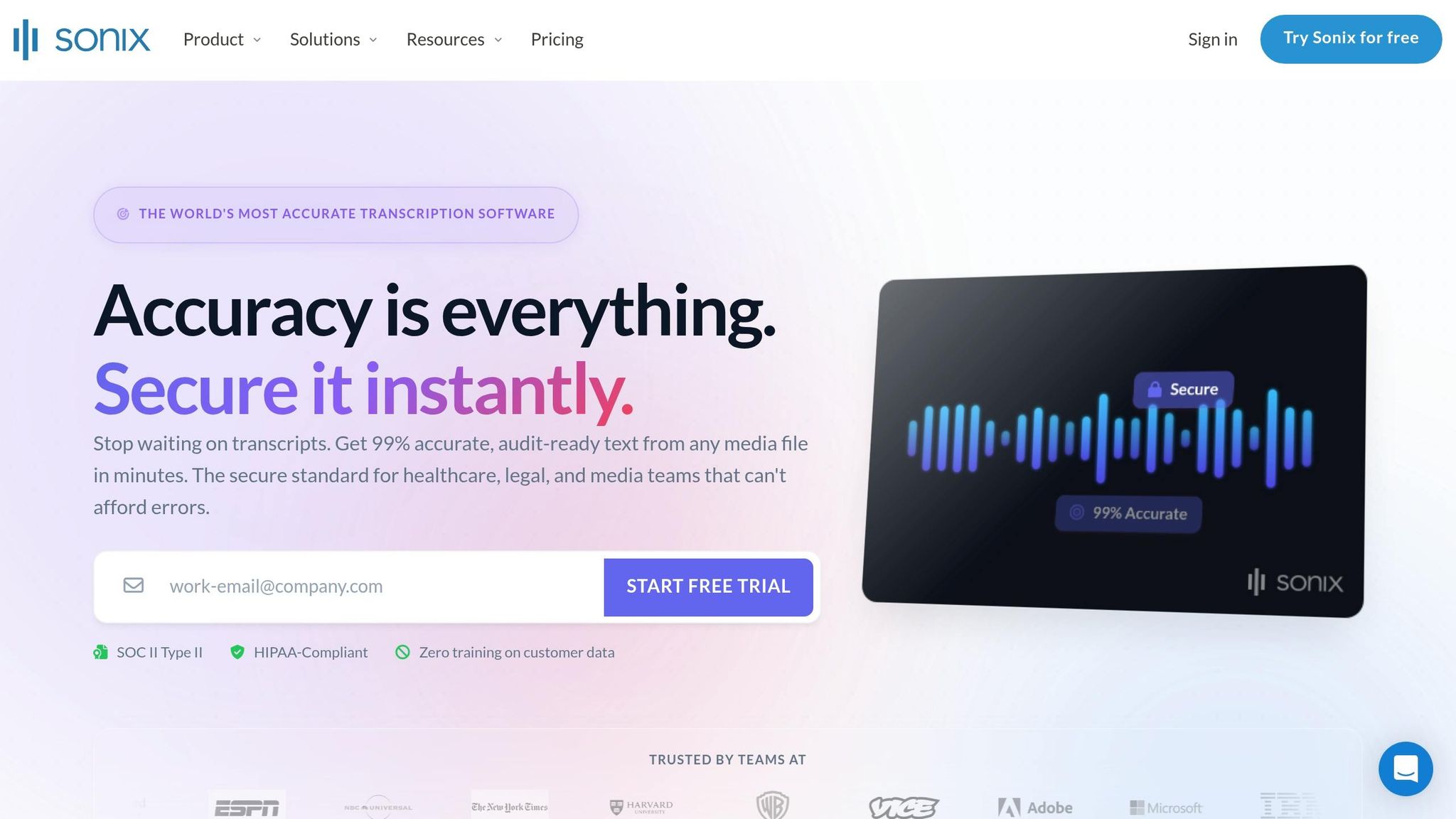
Sonix offers impressive transcription accuracy at 99% and supports over 53 languages. It processes audio-to-text swiftly, completing transcription for a 30-minute recording in just 5 minutes, while cutting costs by 60%–80%.
Voice-to-Text Transcription Capabilities
One standout feature is speaker diarization, which automatically identifies and labels different speakers during a session. This is particularly helpful for multi-participant scenarios like group therapy or family counseling sessions. The transcripts are time-aligned, with clear speaker labels and key statements. Users can even click on any text segment to jump directly to the corresponding moment in the audio.
Sonix also includes sentiment analysis, allowing users to track emotional patterns across speakers and topics – an invaluable tool for psychology trainees. For broader insights, the multi-transcript analysis feature enables users to search entire folders of transcripts, making it easier to spot recurring themes or trends across multiple sessions. Additionally, users can upload custom dictionaries with specialized therapeutic terms or medication names, further boosting transcription accuracy.
These advanced transcription tools are complemented by features designed to simplify and enhance training and supervision workflows.
Features Tailored for Psychology Training
Sonix provides AI-generated structured summaries and SOAP notes, which can save significant time on documentation. The platform also supports multi-user workspaces with role-based permissions, allowing supervisors to securely review trainee transcripts and offer feedback. For academic purposes, transcripts can be exported directly to qualitative analysis tools like NVivo, ATLAS.ti, and MAXQDA – key resources for psychology research and training. It’s no surprise that over 500 universities and 1 million researchers rely on Sonix for academic-grade transcription.
These features not only streamline documentation but also foster better supervision and reflective learning, which are essential components of effective psychology training.
HIPAA Compliance and Data Security
When it comes to handling sensitive information, Sonix ensures robust security. The platform offers Business Associate Agreements (BAAs) for enterprise customers working with protected health information (PHI). It uses AES-256 encryption for data at rest and in transit and holds SOC 2 Type II certification, which confirms its independently verified security standards. Automatic PHI detection flags sensitive patient details within transcripts, and a strict zero-training policy ensures that user data is never used to train AI models. Additional security measures include granular user permissions, single sign-on (SSO) integration, and detailed audit logs to track all access to clinical data.
These safeguards make Sonix a reliable choice for professionals handling confidential information.
4. Mentalyc
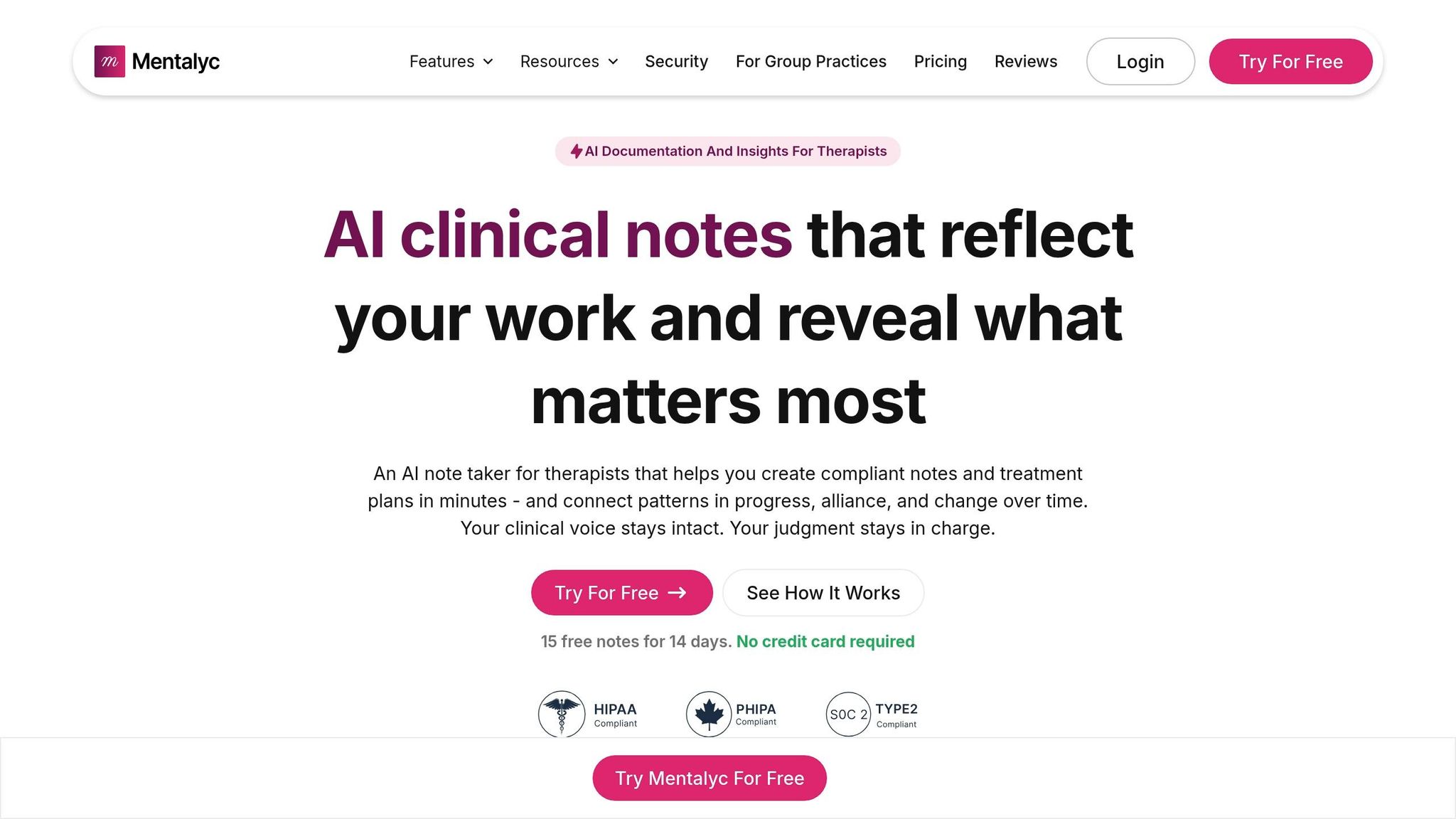
Mentalyc is trusted by over 30,000 therapists. A key feature of this tool is its strict zero recording storage policy – audio files are automatically deleted three days after the note is finalized. This policy helps reduce the risks associated with storing sensitive client data, which is particularly valuable for trainees and supervisors.
Voice-to-Text Transcription Capabilities
Mentalyc uses an AI-powered ambient recorder to transform audio from therapy sessions into structured clinical notes. If a client chooses not to be recorded, therapists can rely on the platform’s dictation feature to summarize the session manually. It supports various therapy formats, such as individual, couples, group, and child therapy sessions. Clinicians have reported a dramatic reduction in documentation time – cutting it down from 45 minutes to less than 5 minutes per session.
"I’m able to move in and out of doing my notes within that small five-minute gap between sessions. I’m able to keep compliance and rest assured everything is covered."
- Amber McKinney, Licensed Clinical Social Worker
This efficiency in transcription lays the groundwork for Mentalyc’s specialized tools designed for psychology training.
Features Tailored for Psychology Training
Mentalyc goes beyond documentation with features that enhance psychology training. Alliance Genie™ offers insights into the therapeutic alliance, focusing on elements like attunement, collaboration, and potential relationship ruptures – valuable for supervision and skill development. Supervision tools include note templates, read-only access for supervisees, and collaborative features like AI-generated feedback and reflective suggestions for growth.
The platform also ensures continuity of care through its "Golden Thread" feature, which connects session notes, treatment plans, and progress tracking throughout a client’s history. This functionality is particularly useful for insurance reviews and supervision. For pre-licensed therapists, interns, and trainees, discounts are available while they work toward licensure.
HIPAA Compliance and Data Security
Mentalyc prioritizes data security and compliance, offering a downloadable Business Associate Agreement (BAA) and adhering to HIPAA, SOC 2 Type II, PHIPA, PIPEDA, and APP standards. It even includes consent templates for managing SUD records under 42 CFR Part 2. All data is encrypted during transmission and at rest using healthcare-grade protocols. Transcripts are anonymized – removing identifying details – so they are not classified as medical records unless linked by the therapist. Additionally, Mentalyc ensures that clinician and client data is never used to train AI models. Secure access is supported with two-factor authentication (2FA) and Single Sign-On (SSO).
"Radical data transparency is what healthcare needs at this point to build trust… I appreciate that Mentalyc is trying to elevate industry standards."
- Kevin Ramotar, Clinical leader in Digital Health, Quality, and Compliance
5. Psynth
Psynth brings a fresh perspective to psychology training by focusing on automated diagnostic reports instead of traditional session notes. It transforms test results, intake data, and clinical observations into comprehensive diagnostic reports in under 45 minutes – cutting down what used to take over 6 hours. This time-saving feature is especially helpful for psychology trainees, who often juggle learning to craft detailed psychological assessments with managing demanding caseloads. By simplifying the reporting process, Psynth creates opportunities for trainees to concentrate on refining their skills.
Voice-to-Text Transcription Capabilities
Psynth supports a wide range of clinical data formats, including PDFs, images, and even handwritten notes. Its AI models are fine-tuned to understand psychological terms and therapeutic concepts, making it a versatile tool. The platform is compatible with over 250 psychological assessments and can integrate additional ones upon request. Draft reports are generated based on established psychological reporting standards and include data visualizations that patients can easily understand. Built-in quality control features flag errors or omissions, encouraging trainees to improve their documentation accuracy.
Features Tailored for Psychology Training
Psynth ensures that clinicians remain actively involved in the diagnostic process. While the AI organizes data and creates drafts, the responsibility for final diagnostic conclusions lies with licensed professionals or supervisors. The system also includes AI prompts and manual input options, giving users flexibility in customizing reports.
"The AI amplifies the clinician. It does not replace them." – Psynth, Inc.
By reducing the time spent on report writing – often 40% of clinical hours – Psynth allows trainees to focus more on in-depth clinical analysis.
HIPAA Compliance and Data Security
Psynth’s commitment to data security is evident in its HIPAA compliance, independently verified by AIS in March 2026. Operating as a Business Associate, the platform requires a signed Business Associate Agreement (BAA) before granting access. Importantly, no Protected Health Information (PHI) is used to train its machine learning models, and the system ensures zero data retention on Large Language Model servers.
"We made a deliberate decision early on to earn compliance before we needed it… because our clinicians deserve a platform that protects their patients as rigorously as they do." – Stephen Stearman, CEO & Co-Founder, Psynth
Psynth incorporates multi-factor authentication and role-based access controls, adhering to the principle of least privilege. Data is encrypted using TLS 1.2+ during transit and at rest, with AWS CloudWatch and GuardDuty providing continuous monitoring for potential threats. Beyond HIPAA, the platform also complies with PIPEDA (Canada) and GDPR (UK/EU), making it a suitable choice for international psychology training programs.
6. BastionGPT
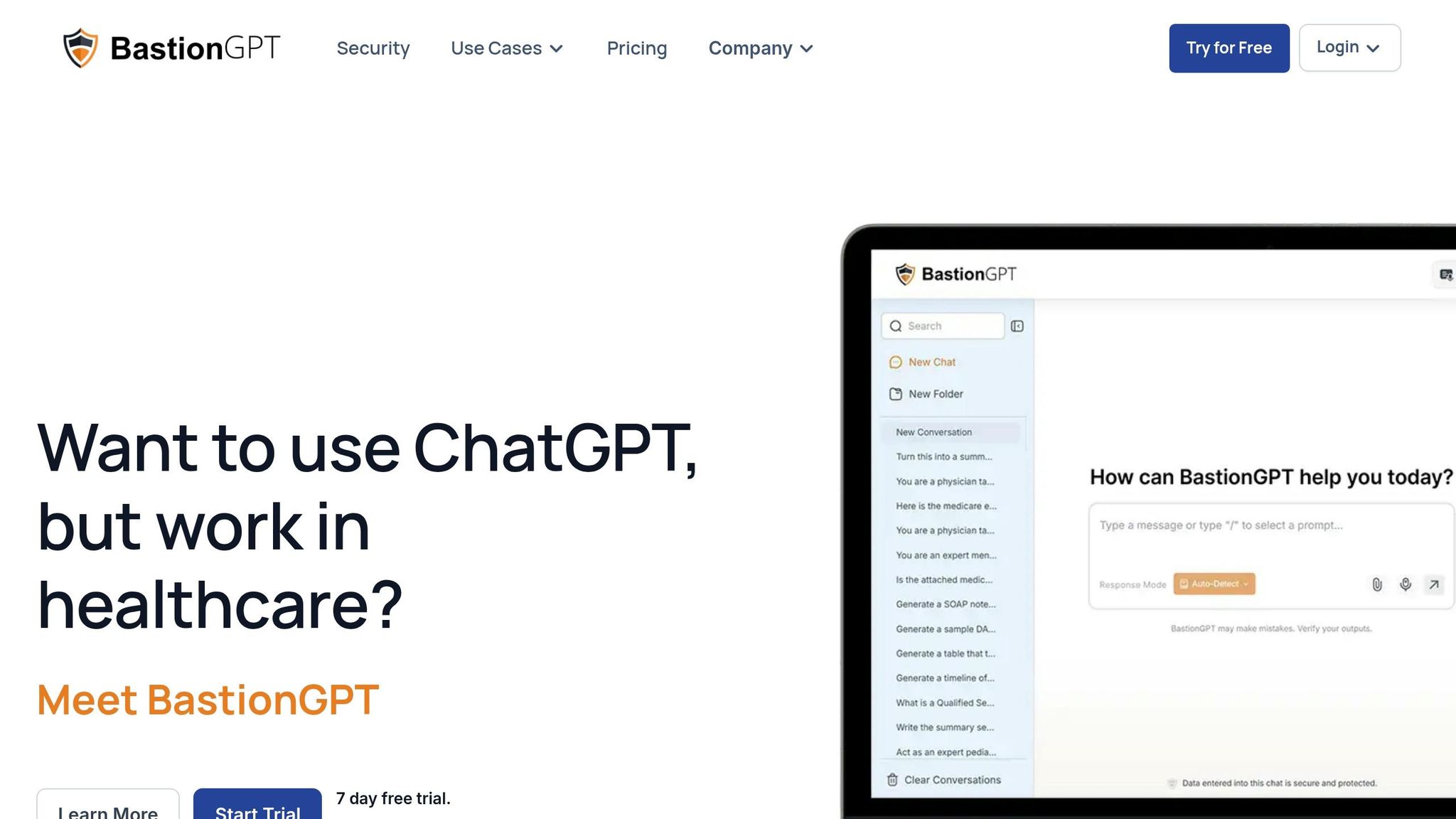
In the fast-changing world of psychology training, keeping documentation efficient is a game-changer. BastionGPT, trusted by over 9,000 healthcare organizations, helps users reclaim 90 minutes daily by streamlining documentation tasks. With plans starting at just $20 per user per month for the Professional tier, it offers unlimited secure transcription, making it a strong fit for psychology training. Its ability to handle sensitive clinical topics – like violence or sexual abuse – without restrictive filters ensures comprehensive trauma-related documentation is possible.
Voice-to-Text Transcription Capabilities
BastionGPT’s transcription tool can distinguish up to four speakers, making it ideal for reviewing supervision sessions or group therapy discussions. It doesn’t just transcribe – it converts recordings into draft notes, summaries, and custom reports, all tailored to the user’s preferences. The platform emphasizes medical accuracy and clarity, which is critical for psychology professionals.
"From summarizing assessments to rewording reports for clarity, its user-friendly design saves me invaluable time." – Andrew Williams, Clinical Psychologist
Features Tailored for Psychology Training
BastionGPT goes beyond transcription. It includes tools to review and refine documentation, helping trainees spot errors like incorrect pronouns, vague descriptions, or coding issues. Users can also create custom note templates to match their personal style. Designed with students and interns in mind, the platform complies with both HIPAA and FERPA standards, making it suitable for educational settings. Its safety, bias, and security features have earned the approval of the American Psychiatric Association, which invited BastionGPT to exhibit at the 2025 APA Conference.
HIPAA Compliance and Data Security
Every BastionGPT plan includes a HIPAA Business Associate Agreement (BAA), covering both Covered Entities and Business Associates. The platform uses specialized versions of GPT-5.2, Claude, and Gemini that are HIPAA-compliant and not publicly accessible. This ensures chat histories remain private and are never used to train AI models.
"The HIPAA compliance is a huge time saver because I do not have to take out identifying information." – Alexis Arceo, CEO, Expedited Reports
For organizations needing advanced security, the Ultra plan – priced at $65 per user per month for groups of 100 or more – offers features like single sign-on (SSO) and local cloud deployment. With 85% of users reporting improved patient care quality, BastionGPT shows how strong data protection can help psychology trainees stay productive while maintaining strict confidentiality.
7. Therapy iQ
Therapy iQ is designed with HIPAA compliance standards that cater specifically to the needs of psychology training. For psychology students and professionals working with sensitive client information, understanding these standards is essential when selecting voice-to-text tools.
HIPAA Compliance
Therapy iQ takes secure documentation seriously by meeting strict HIPAA requirements.
HIPAA compliance for AI transcription tools operates on two distinct levels:
- Level 1 (Basic Security): This includes essential encryption protocols and a signed Business Associate Agreement (BAA).
- Level 2 (Data Handling): This focuses on how session data is managed over time. Level 2 ensures that recordings aren’t stored long-term or used for AI training purposes.
This second level is particularly critical for psychology trainees, who often deal with highly sensitive cases involving trauma, abuse, or other confidential issues. By adhering to these standards, Therapy iQ reduces risks and strengthens confidentiality, making it a reliable choice for those in psychology training.
Data Security Considerations
For psychology trainees, understanding these compliance levels is vital when choosing tools for documentation. The way a tool handles data – whether it retains recordings or uses session information for AI training – can significantly impact both client and trainee privacy.
If you’re a psychology student or intern managing supervision cases, selecting tools that meet these stringent standards ensures your work remains protected, while also safeguarding the privacy of your clients. Therapy iQ’s approach to data security sets it apart as a trusted solution for this purpose.
Comparison Table
This table highlights the key features and compliance protocols of various tools designed to support psychology training documentation. It provides a breakdown of how these tools align with the needs of psychology students and professionals in training.
| Tool | HIPAA Compliance | Training-Specific Features | Pricing Structure | Key Limitations |
|---|---|---|---|---|
| Voice CRM | End-to-end encryption; user-only data access | Supervision Management module for tracking cases and professional growth; mood tracking and thematic tagging | Basic, Professional, and Enterprise plans available | iOS only |
| Skriber | BAA; basic compliance | Standard transcription for session notes | Data not provided | Limited training-focused tools |
| Sonix | BAA; encryption | General transcription with editing capabilities | Data not provided | Not designed specifically for mental health |
| Mentalyc | SOC 2 Type II; zero recording storage; no AI training on client data | Alliance Genie™ for therapeutic alliance insights and supervision reflection | 14-day free trial (15 notes, no credit card needed) | Data not provided |
| Psynth | Data not provided | Data not provided | Data not provided | Data not provided |
| BastionGPT | Data not provided | Data not provided | Data not provided | Data not provided |
| Therapy iQ | Level 1 and Level 2 (no long-term recording storage or AI training use) | HIPAA-focused documentation standards | Data not provided | Data not provided |
When selecting a tool, it’s crucial to verify its data handling practices to ensure compliance, especially for managing sensitive supervision cases. Tools with SOC 2 Type II certification and policies like zero-storage of recordings help minimize risks of subpoenas and data breaches – a priority for trainees working with confidential information.
For those on a tight budget, Mentalyc offers a 14-day free trial with up to 15 notes, requiring no credit card, making it an accessible way to explore its features before making a financial commitment. Meanwhile, Voice CRM stands out by saving users over 10 hours weekly on documentation tasks, a significant advantage for students balancing rigorous training schedules.
Opting for a tool that combines advanced HIPAA protections with training-specific modules can greatly enhance both clinical and supervisory performance. Keep reading for more strategies to streamline your documentation process.
Conclusion
Voice-to-text tools can dramatically cut documentation time, reducing it from 10 minutes to just 2 minutes per session. That’s up to 10 hours a week saved – time that can be redirected toward clinical work or even self-care.
But speed isn’t the only advantage. Features like data security and specialized functionality make these tools reliable for documentation. Look for tools offering supervision tracking and thematic tagging to enhance training effectiveness. When dealing with sensitive client data, prioritize providers with SOC 2 Type II certification and clear policies stating that session recordings won’t be used to train AI models. Tools that avoid storing recordings altogether can help minimize legal risks, especially concerning subpoenas.
For mental health professionals, accuracy is critical. Specialized tools designed for the field can achieve 95-99%+ accuracy in recognizing DSM terminology and medication names, far outperforming general consumer apps that average only 75-85%. To ensure compliance and quality, confirm the tool includes a signed BAA and end-to-end encryption.
"My notes get finished after every single session now because Mentalyc makes it so easy. I’m not stressed out about notes and I feel like my notes are of much higher quality."
- Sasha Kendall, Licensed Clinical Social Worker
One simple tip to stay on top of documentation? Follow the "10-minute rule" – dictate notes immediately after sessions while the details are still fresh. This keeps you compliant without extending your workday. Start with free trials to test how well a tool handles clinical terminology and fits your workflow. The right voice-to-text tool can make all the difference in modern psychology training.
FAQs
Do I need a signed BAA to use voice-to-text for client notes?
Absolutely. To comply with HIPAA regulations, you need a signed Business Associate Agreement (BAA) when using voice-to-text tools for client notes. This agreement ensures that sensitive client information is protected and that the tool meets the legal standards for data security. Without a BAA in place, you risk violating HIPAA guidelines, which could lead to serious legal and financial consequences.
How can I get client consent for recording or dictation in sessions?
To get client consent for recording or dictation, start by clearly explaining why the recording is needed and how the information will be used, stored, and kept secure. Use consent forms that are easy to understand, avoiding complex or technical language. Make sure the client gives explicit consent and document this in their record. Let clients know they can withdraw their consent at any time and explain how they can do so. Taking these steps ensures transparency, builds trust, and aligns with legal and ethical requirements.
What should I verify about audio storage and AI training before using a tool?
It’s crucial to confirm that the tool’s audio storage meets HIPAA standards for protecting sensitive health information. Additionally, ensure that any recorded data is not repurposed for AI training without obtaining proper consent. Transparent data-use policies are essential to safeguarding client confidentiality and promoting ethical handling of sensitive information.